
Georgia Dog Bite Law: How O.C.G.A. § 51-2-7 Really Works
The Georgia dog bite law can feel confusing right after an attack, especially when people assume every dog owner automatically pays. The truth is more specific, and it turns on one statute, O.C.G.A. § 51-2-7. We handle these claims across the state, and this guide breaks the law down in plain terms.
Here is the short version: Georgia is not a strict-liability state for dog bites. An owner is responsible only when certain conditions are met, not simply because a dog bit someone. This guide explains those conditions, how leash laws matter, and the deadlines and damages that shape a claim.
Key Takeaways
- Georgia is not a strict-liability state for dog bites, and liability under O.C.G.A. § 51-2-7 depends on the owner’s knowledge or a leash-law violation.
- The statute gives two routes to hold an owner responsible: proof of the dog’s vicious propensity, or proof that the dog broke a local leash ordinance.
- Georgia has no general statewide leash law, so leash rules come from city and county ordinances, plus the Responsible Dog Ownership Law for classified dogs.
- The Responsible Dog Ownership Law separates dangerous dogs from vicious dogs, and only vicious dogs carry the $50,000 liability insurance requirement.
- Georgia applies owner liability regardless of knowledge when a loose dog harms livestock, poultry, a pet animal, or property.
- Injured people generally have two years to file under O.C.G.A. § 9-3-33, and shared fault can reduce recovery under O.C.G.A. § 51-12-33.
Is Georgia a Strict-Liability State for Dog Bites?
 No, Georgia is not a strict-liability state for dog bites, which means an owner does not automatically owe money just because a dog caused an injury. Georgia dog bite law asks whether the owner was careless in a way the statute recognizes.
Strict liability would hold an owner responsible no matter what they knew or did, and Georgia rejects that approach for dog cases. An injured person must show one of two specific things before an owner can be held liable.
This standard sits between full strict liability and the old, harsh rule that gave every dog one free bite. Georgia lands in the middle.
There is one notable exception, and it runs the other way. When a loose dog harms an animal or property rather than a person, Georgia does impose liability regardless of what the owner knew, which the livestock section below explains.
What Does Georgia Dog Bite Law Require Under O.C.G.A. § 51-2-7?
Georgia’s dog bite law is built around O.C.G.A. § 51-2-7, often called Georgia’s dog bite statute. It says an owner who carelessly manages a dangerous animal, or lets it run loose, can be liable when that animal hurts someone who did not provoke it.
Three ideas do the heavy lifting. The owner must have managed the animal carelessly or allowed it to go at liberty, the injured person must not have provoked the attack, and the law gives a shortcut for proving the dog was dangerous.
An example helps. If a dog with no history slips through a properly latched gate and nips a passerby, an owner may have a real defense. If that same dog had lunged at mail carriers for months, the owner’s knowledge changes the picture entirely.
One limit is written into the statute. The leash-ordinance shortcut does not apply to domesticated fowl or domesticated livestock.
What Are the Two Ways to Hold a Dog Owner Responsible in Georgia?
Georgia gives injured people two ways to prove an owner is liable, and only one needs to succeed. Lawyers call these the vicious-propensity route and the leash-ordinance route.
What Is the Vicious-Propensity Route?
This path shows the owner knew, or should have known, that the dog was dangerous. Evidence can include an earlier bite, a pattern of lunging or snapping, or complaints neighbors made. Georgia does not require a prior bite, so other warning signs can be enough.
What Is the Leash-Ordinance Route?
This path is often simpler, because it relies on a broken local leash rule rather than the owner’s state of mind. When an ordinance required the dog to be at heel or on a leash, and the dog was not restrained during the attack, that violation establishes vicious propensity.
It establishes that one element and no more. A claim still needs careless management or a dog allowed to go at liberty, causation, and an injured person who did not provoke the attack. In practice, we often pursue both routes at once, because one set of facts may support the owner’s knowledge while another shows a leash violation.
Is There a Leash Law in Georgia?
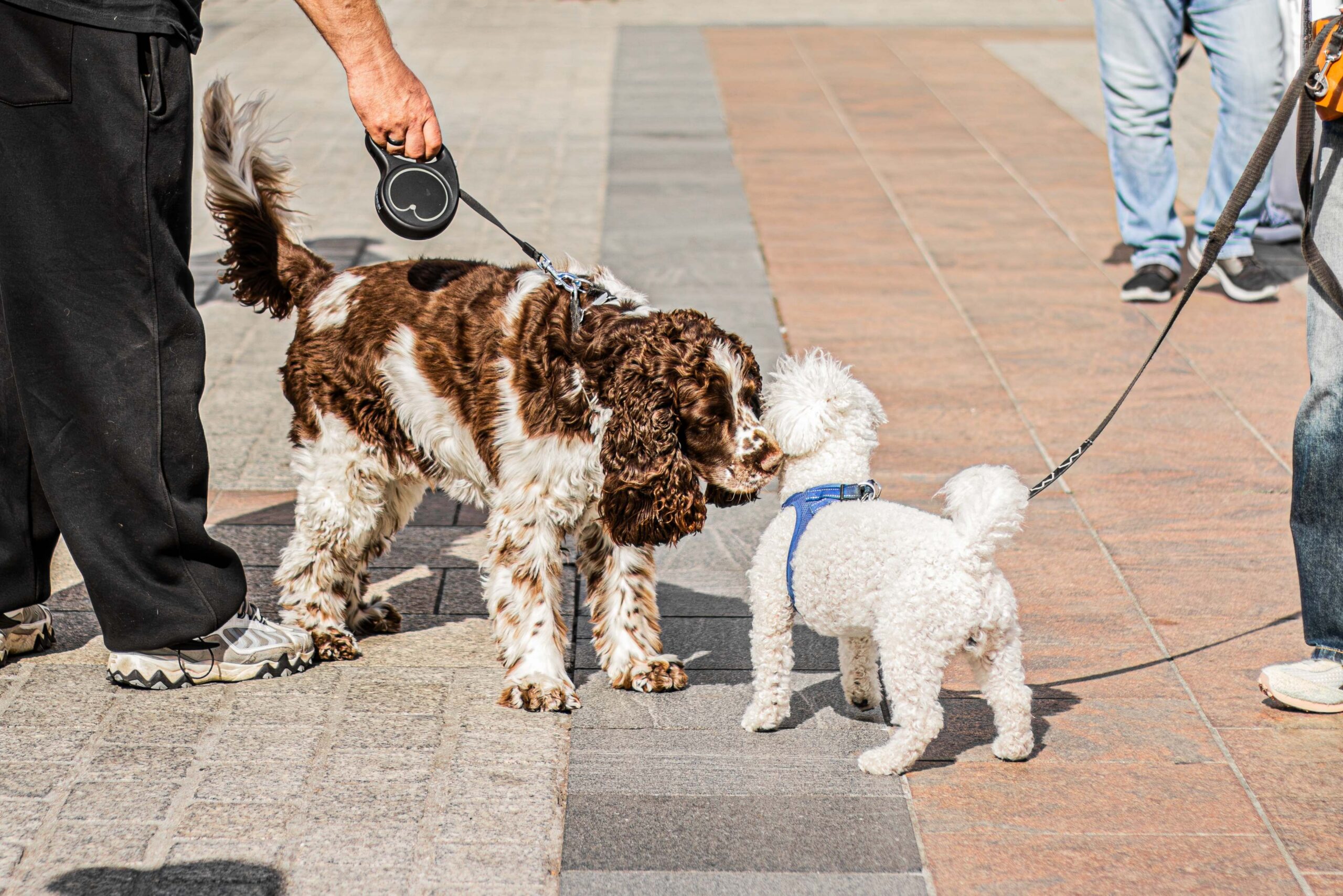 Georgia has no single statewide leash law, so the answer depends on where the bite happened. Leash rules come from city and county ordinances, which differ from one community to the next.
Here is how Georgia leash laws work in the metro Atlanta jurisdictions where most of our cases arise. Checking the local ordinance is one of the first steps we take in any leash-related claim.
What Are Atlanta’s Leash Rules?
In the City of Atlanta, dogs must stay leashed in city parks, trails, and other public spaces unless a space is marked as off-leash.
What Is the Leash Law in Fulton County?
In unincorporated Fulton County, and in cities that contract with the county for animal control, dogs may not run at large. A dog off its owner’s premises must be on a leash no longer than six feet and under the control of a competent person. Fulton County also requires every dog and cat to be registered.
What Is the Leash Law in DeKalb County?
DeKalb County runs its own animal ordinances covering containment and roaming. An owner must keep an animal under restraint and control at all times while it is off the owner’s property, except in county parks designated as off-leash areas. The ordinance also bars letting an animal run at large unattended on streets, in county parks, on the common property of an apartment complex or condominium community, or on another person’s property without permission.
What Is the Leash Law in Gwinnett County?
Gwinnett County makes it unlawful for an owner to fail to keep a dog under restraint or control, under Section 10-71 of its Animal Control Ordinance. After a bite, the county requires the owner to quarantine the dog for 10 days at a veterinarian, animal hospital, or approved boarding facility.
There is a statewide layer for certain dogs. Once a dog is classified as dangerous or vicious, state law adds leash and containment duties.
The same loose dog can break the law in one city and follow it in the next, so we pull the exact ordinance for the spot where the bite happened.
What Is the Georgia Responsible Dog Ownership Law?
The Georgia Responsible Dog Ownership Law, found at O.C.G.A. § 4-8-20 and following, sets statewide rules for dogs labeled dangerous or vicious. It works alongside O.C.G.A. § 51-2-7 rather than replacing it, and classification is done by a local authority.
The two labels are defined precisely, and the difference matters. A dangerous dog is one that causes a substantial puncture of a person’s skin without serious injury, aggressively attacks so that a person reasonably believes an imminent threat exists, or kills a pet animal while off the owner’s property. A vicious dog is one that inflicts serious injury on a person or causes serious injury through a person’s reasonable attempt to escape an attack.
Georgia does not brand any breed as vicious on its own. Both classifications rest on behavior, and both require a certificate of registration under O.C.G.A. § 4-8-27.
 The duties are then split. A dangerous dog owner must provide a secure enclosure and post warning signs. A vicious dog owner must do that and also carry general or specific liability insurance of at least $50,000, which is why the classification on file can decide whether there is any coverage behind a claim at all.
Off the owner’s property, a classified dog must be restrained by a leash no longer than six feet. Any violation of the article allows a dog control officer or law enforcement officer to confiscate the dog immediately. We check the classification history early, because it shapes both liability and recovery.
What Does O.C.G.A. § 51-2-6 Say About Dogs and Livestock?
Not every dog bite involves a bite to a person. O.C.G.A. § 51-2-6 covers a different situation, where a dog off its owner’s property kills or maims livestock. The owner or person having charge of the dog is liable for the damages and for the full costs of the action.
A related statute, O.C.G.A. § 4-8-4, reaches further. It makes an owner, or the custodian in control if no owner is found, civilly liable when a dog off that property injures, kills, or damages livestock, poultry, a pet animal, or public or private property.
Here is the part most summaries miss. Under § 4-8-4, the owner’s knowledge of the dog’s tendencies is irrelevant, so a dog with a clean history still triggers liability. Georgia, therefore, protects a neighbor’s dog more automatically than it protects the neighbor, and the statute is cumulative of other remedies rather than a replacement for them.
How Does Fault Sharing Affect Your Recovery?
Sharing some blame does not end a Georgia dog bite claim, thanks to a rule called modified comparative negligence. Under O.C.G.A. § 51-12-33, your recovery is reduced by your share of fault, and it is barred only when you were 50% or more responsible.
Provocation is the most common fault argument in dog cases. If an injured person teased, hit, or startled the dog, an owner may claim that person shared responsibility.
The math is concrete. A person found 20% at fault on a $100,000 claim recovers $80,000, while a person found 50% at fault recovers nothing. That sharp cutoff is why fault is so heavily fought in these cases.
What Are the Deadlines and Damages Under Georgia Dog Bite Law?
Georgia dog bite law puts a firm clock on your claim, and the deadline comes first in importance, because missing it can end a case before it begins.
Under O.C.G.A. § 9-3-33, you generally have two years from the date of the bite to file a lawsuit. Some situations pause that clock, including a claim belonging to a child, but a claim against a city runs on a separate and much shorter notice deadline that the minor rule does not extend.
On the recovery side, an injured person can seek past and future medical costs, lost income, reduced earning capacity, and the physical and emotional harm the attack caused. Permanent scarring often carries added weight, particularly for a child, because it is a part of the harm that does not resolve.
Emotional harm counts alongside physical injury, and Georgia law lets an injured person seek payment for it. Reporting the bite through Georgia’s rabies control program and your county health department also creates a paper trail that can support a claim later. For the practical steps to take in the days after an attack, see our Georgia dog bite claims guide.
FAQs: Georgia Dog Bite Law
These questions come up often once people start reading about Georgia’s dog bite law.
Does Homeowners’ Insurance Usually Cover a Dog Bite in Georgia?
Often, yes. Many homeowners and renters policies cover injuries a dog causes, which means a claim is frequently paid by an insurer rather than out of a neighbor’s pocket. Coverage depends on the policy and any breed exclusions it contains.
Can a Renter or Landlord Be Responsible for a Dog Bite?
Sometimes both can be. A dog’s keeper does not have to be the legal owner, and a landlord who knew about a dangerous dog on the property may share responsibility. The answer turns on who controlled the animal and who knew about the risk.
What if a Dog Bites Me While I Am Walking on a Public Trail?
Where a local ordinance requires a leash on that trail, a loose dog may point straight to the leash-ordinance route. Photos, witness names, and the exact location all help show that a leash rule was broken.
Do I Need to Report a Dog Bite to Animal Control?
Reporting the bite to your local animal control or health department is strongly advised and often required. Fulton County Animal Services and its counterparts in other counties take these reports, and the resulting file can help establish what happened later.
Are Certain Dog Breeds Banned in Georgia?
No, Georgia does not ban specific breeds, and state law classifies dogs by behavior rather than breed. Some local governments add their own rules, so it is worth checking the ordinance where you live.
Which Georgia Communities Do Our Dog Bite Lawyers Serve?
We represent dog bite victims across metro Atlanta and beyond. Find the page for the community where the attack happened:
- Acworth Dog Bite Lawyer
- Alpharetta Dog Bite Lawyer
- Atlanta Dog Bite Lawyer
- Brookhaven Dog Bite Lawyer
- Buckhead Dog Bite Lawyer
- Buford Dog Bite Lawyer
- Canton Dog Bite Lawyer
- Carrollton Dog Bite Lawyer
- Cartersville Dog Bite Lawyer
- College Park Dog Bite Lawyer
- Conyers Dog Bite Lawyer
- Decatur Dog Bite Lawyer
- Doraville Dog Bite Lawyer
- Douglasville Dog Bite Lawyer
- Duluth Dog Bite Lawyer
- Dunwoody Dog Bite Lawyer
- East Point Dog Bite Lawyer
- Fairburn Dog Bite Lawyer
- Hapeville Dog Bite Lawyer
- Johns Creek Dog Bite Lawyer
- Kennesaw Dog Bite Lawyer
- Lawrenceville Dog Bite Lawyer
- Lilburn Dog Bite Lawyer
- Marietta Dog Bite Lawyer
- McDonough Dog Bite Lawyer
- Noonan Dog Bite Lawyer
- Norcross Dog Bite Lawyer
- Peachtree Corners Dog Bite Lawyer
- Roswell Dog Bite Lawyer
- Sandy Springs Dog Bite Lawyer
- Smyrna Dog Bite Lawyer
- Snellville Dog Bite Lawyer
- South Fulton Dog Bite Lawyer
- Sugar Hill Dog Bite Lawyer
- Suwanee Dog Bite Lawyer
- Tucker Dog Bite Lawyer
- Union City Dog Bite Lawyer
- Woodstock Dog Bite Lawyer
Get Help Applying Georgia Dog Bite Law to Your Case
 A dog bite raises hard questions at a frightening time, and you should not have to sort through Georgia dog bite law on your own. Zagoria Neely Injury Attorneys focuses on these cases, and our team knows how Georgia’s dog bite statute, local leash ordinances, and insurance coverage fit together.
Call 404-653-0023 to talk with someone who understands what you are facing.


